The development of electronic assembly technology demands new process materials to adapt to it, while the development of new process materials further promotes the development of assembly technology. Assembly process materials must meet the needs of the rapid development of assembly technology.
①
From the perspective of high-performance and high-quality product requirements, modern electronic process materials should have good stability and reliability. For mounting adhesives, the strength should be neither too high nor too low, ensuring no chip detachment during soldering while facilitating component replacement during maintenance; for solder, the content of harmful impurities must be strictly controlled; for flux and solder paste, low residue and non-corrosiveness are required, and some military products still require cleaning after soldering.

②
From the perspective of mass production requirements, assembly process materials must meet the needs of high speed. The development of mounting adhesives is the most concrete example. In the mid-to-late 1980s, most mounting adhesives used intermittent oven curing, typically at 150℃ for about 20 minutes. However, in the 1990s, continuous curing in tunnel ovens became dominant, requiring mounting adhesives to cure at 150℃ for less than 5 minutes, and recently, curing in 1-2 minutes is even required.

③
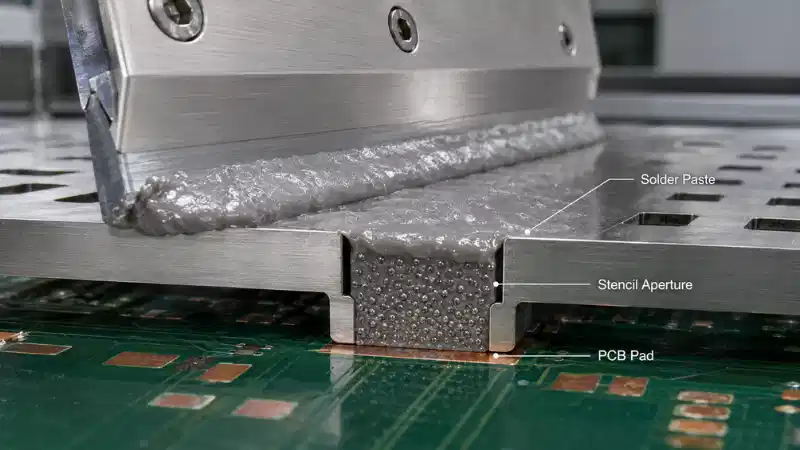
With the development of fine-pitch assembly, higher assembly density is required. This necessitates finer particle size for the alloy solder powder in the solder paste, better thixotropy in the solder paste and mounting adhesive, and lower slump. Strict control of the solid content and activity in the flux is crucial to prevent soldering defects such as bridging.

④
It is environmentally friendly and beneficial to human health. With increasing calls for protecting the ozone layer, no-clean and water-cleaning fluxes and solder pastes have seen significant development. Simultaneously, various cleaning agents that do not damage the ozone layer have been developed. From the perspective of protecting the environment and human health, VOC-free (volatile organic compound) no-clean fluxes and solder pastes have recently been developed. To eliminate the toxicity of lead to humans, various lead-free solders have been developed in recent years and remain a major direction in solder research and development.

⑤
Modern communication electronic products are also developing towards integration. The large-scale application of integrated chips and high-power devices has placed higher demands on product heat dissipation methods and materials. New types of thermal conductive materials have emerged during this period, such as high thermal conductivity ultra-flexible thermal conductive pads, high thermal conductivity low viscosity thermal conductive adhesives, phase change materials, and graphene thermal conductive materials. These developments have also been driven by the advancement of assembly technology.