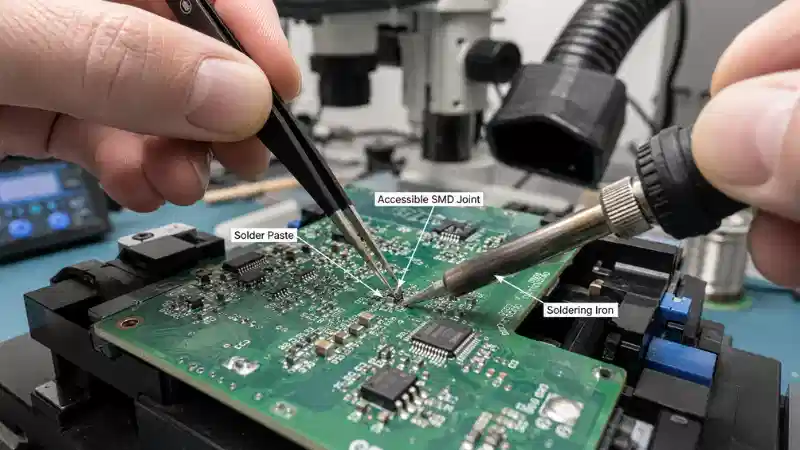
Solder paste selection operates at the intersection of metallurgy, rheology, and supply chain economics-a decision matrix where technical performance, process compatibility, and commercial realities collide. The global market fragments across American, European, Japanese, and increasingly capable Chinese manufacturers, each bringing distinct formulation philosophies and service models. What follows is not a ranked list but a practitioner's assessment of the major players, informed by fifteen years of qualification testing, production firefighting, and late-night calls with FAEs when lines go down.

Indium Corporation
I'll start here because they're who I call when something weird happens.
Indium's technical documentation is genuinely useful-not marketing dressed as engineering, but actual data you can use to troubleshoot. Their 8.9HF series has been my default recommendation for high-reliability work since 2019. Void performance on QFN is consistently under 15% without heroic reflow profiling. That matters when you're building automotive radar modules that can't fail at -40°C.
The company is privately held, headquartered in Clinton, New York, been around since 1934. They started in indium metal (obviously) and expanded into soldering materials. What I appreciate: when you call tech support, you often get someone who actually formulated the paste you're asking about. Try that with a conglomerate.
Pricing sits at the premium end. A 500g jar of their Type 4 SAC305 runs maybe 30-40% higher than mid-tier alternatives. Whether that premium buys you anything depends on your defect cost structure. If you're building $15 Bluetooth speakers, probably not. If a field failure triggers a recall, the math changes.
Their low-temperature bismuth-tin formulations are where things get interesting. The industry's been chasing low-temp reflow for years-component thermal sensitivity, energy costs, enabling cheaper substrates. Indium's work here is legitimately ahead. I tested their BiAgX material last year for a wearables application. 138°C liquidus. Joints looked acceptable under cross-section but-and this is the catch with all bismuth alloys-long-term reliability data is still accumulating.
Alpha (MacDermid Alpha)
Alpha got absorbed into MacDermid, which got absorbed into Element Solutions. Corporate structure aside, the paste is still made by people who know what they're doing.
Their OM-338 was everywhere in the 2000s. Solid workhorse paste. The newer OM-565 series targets the automotive crowd with better thermal cycling performance. I've run it through qualification. Numbers look good. Whether it survives ten years in an engine compartment remains to be seen-that's the problem with reliability claims, you're always extrapolating.
One thing Alpha does well: application-specific formulations. They'll work with you on custom flux chemistries if your volume justifies it. Did a project in 2021 where standard no-clean wasn't cutting it for a particularly nasty pad finish. Their team reformulated the activator package. Took three iterations but we got there.
Distribution network is extensive. You can get Alpha paste in places where other premium brands require six-week lead times.
Senju Metal Industry Co
The Japanese approach to solder paste formulation is... different.
Senju operates like they're building paste for the next fifty years, not the next quarter. Conservative specifications, exhaustive qualification, reluctance to rush products to market. When their datasheet says something, it's been tested beyond what you'd expect.
M705-GRN360-K2-V is their flagship no-clean for general SMT. The naming convention is impenetrable but the paste works. Excellent stencil life-genuinely 8+ hours under reasonable conditions, not the "8 hours if you're in a cleanroom at exactly 23°C and 50% RH" asterisk you get elsewhere.
What Senju doesn't do: cheap. Their pricing reflects Japanese manufacturing costs and quality philosophy. Also, FAE support outside Japan can be slower. I've waited weeks for technical responses that Indium would turn around in a day. Trade-offs.
They've been pushing their "super low" silver formulations (SAC0307 and variants) for cost reduction without reliability compromise. The metallurgical argument is sound. Whether procurement departments understand the nuance-that's organizational, not technical.

Tamura Corporation
Tamura is enormous in Asia, less visible in North America. Their TLF-204 series dominates certain segments of Chinese contract manufacturing.
I have less direct experience here. What I know: pricing aggressive, quality consistent enough for volume consumer electronics, technical support oriented toward high-volume production optimization rather than low-volume problem-solving.
The company has been around since 1924. Originally transformers and coils, expanded into electronic materials. They're publicly traded in Tokyo.
Kester (ITW)
Kester is the paste your grandfather used. That's not entirely a compliment.
They've been making solder since 1899. The brand recognition is massive. Their NXG1 and R276 lines are competent-I've run them, they work-but innovation hasn't been their defining characteristic lately. ITW (Illinois Tool Works, the parent company) runs a tight ship financially. Whether R&D investment has suffered, I couldn't say. But I don't see Kester leading the bleeding-edge stuff.
Where they shine: established relationships with large OEMs, excellent distribution, very competitive pricing at volume. If you're a tier-one supplier to someone who's been specifying Kester since 1995, there's institutional momentum to overcome before switching.
The R276 is specifically designed for paste recycling-recovering material from the stencil and reintroducing it to the jar. Some operations care about this. Most probably shouldn't, but if you're committed to paste recovery, it's formulated for it.
Heraeus
German engineering applied to solder paste. Make of that what you will.
Heraeus came to soldering materials through their precious metals business-they're one of the world's largest processors of platinum group metals. The solder paste division benefits from genuinely sophisticated metallurgical capabilities.
Their F640 series is popular in European automotive. Void performance is good. The company has presence in semiconductor packaging materials too, which informs their fine-pitch formulations.
Personal experience is limited-I've qualified Heraeus paste twice, both times for European customers who specified it. Performed as expected. Nothing remarkable, nothing problematic.
AIM Solder
AIM occupies the interesting space of "good enough for most applications at a price that makes procurement happy."
Headquartered in Montreal. They've been aggressive on pricing without completely sacrificing quality. Their NC259FPA is a reasonable general-purpose paste. I wouldn't spec it for anything with serious reliability requirements, but for commercial electronics with standard life expectations, it's fine.
Tech support is responsive. They tr

Shenmao Technology
Taiwan-based, publicly traded, growing fast. They're the quiet success story that doesn't get discussed in Western trade publications.
Shenmao has been investing heavily in R&D. Their PF735-PQ gets specified into consumer electronics production across Asia. Price-competitive with good-enough quality. I've seen Type 4 from Shenmao that printed as well as mid-tier Japanese material.
Their fine-pitch capabilities are advancing. Five years ago I wouldn't have considered them for 0.3mm pitch CSP. Today I'd test them.
Vital New Material
Chinese domestic champion. Huge in mainland China, expanding internationally.
Quality has improved dramatically since 2015. The earlier reputation for inconsistency was earned-I had lots of problems from batches that varied significantly. Recent experience is better. Whether that's sustainable as they scale further, we'll see.
Pricing undercuts everyone. If you're manufacturing in China and your customer doesn't mandate specific brands, Vital is getting specified.
SMIC (Shenzhen SMIC)
Not to be confused with the semiconductor foundry.
Growing regional player. Limited direct experience. Mentioned for completeness because they're gaining share in mid-tier Chinese manufacturing. Reliability data outside vendor-provided information is sparse.
What Actually Matters When Choosing
Here's where I'll get opinionated.
Nobody picks paste in a vacuum. You're inheriting equipment, process windows, operator training levels, quality expectations. The theoretically optimal paste might be wrong for your actual situation.
I've watched operations switch to "better" paste and see yields drop-not because the paste was bad, but because their stencil design, printer settings, and reflow profiles were optimized for the old material. Then they blame the new paste and switch back.
Qualification testing is not optional. I don't care what the vendor claims. Run your boards through your process with candidate materials. Measure what you actually measure in production. A paste that achieves 0.02ppm defect rates at a competitor's factory means nothing for your factory.
FAE support degrades outside core markets. Japanese paste in America, American paste in China, German paste in Southeast Asia-you're often dealing with distributors rather than manufacturer personnel. Response time suffers. Technical depth suffers. Factor this in.
Powder type selection gets outsourced to process engineers who sometimes don't know. Type 4 is not automatically better than Type 3.
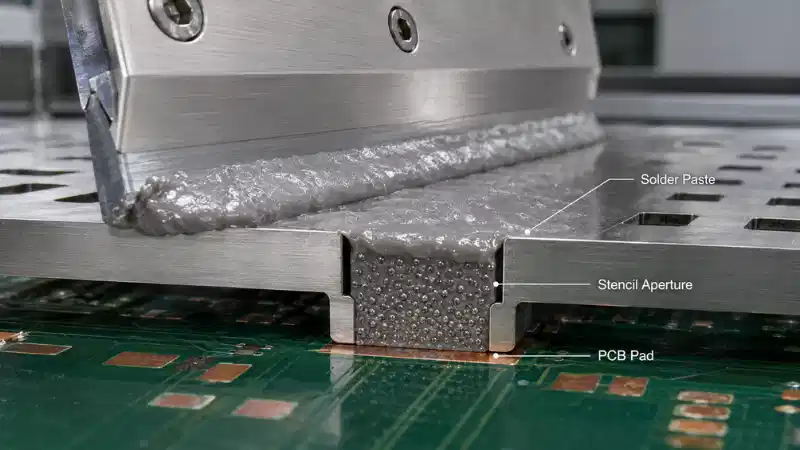
Type 5 is not automatically better than Type 4. Finer powder means faster oxidation, shorter stencil life, tighter process control requirements. Match powder to aperture geometry and let that drive the decision.
The Consolidation Problem
The industry is consolidating. MacDermid bought Alpha. ITW owns Kester. Large chemical companies absorb smaller specialists.
Whether this matters depends on your cynicism level. The optimistic view: larger entities bring resources, stability, global reach. The pessimistic view: cost-cutting, formula changes you don't get told about, technical staff layoffs.
I've seen both. An acquisition kept one brand I liked from going bankrupt in 2008. Another acquisition led to slow degradation of a product line I'd specified for years-subtle changes, harder to get technical data, support becoming more sales-oriented.
No conclusions. Just observation.
If I Had to Choose
For high-reliability work: Indium or Senju. The premium is real but so is the performance and support.
For volume consumer electronics in Asia: Shenmao or Vital, with appropriate incoming inspection.
For automotive in Europe: Heraeus has the certifications and local support.
For general commercial manufacturing with cost pressure: AIM or Alpha, depending on regional availability.
For anything genuinely novel-new alloys, fine-pitch beyond current mainstream, unusual substrates-call Indium and tell them what you're trying to do.
This isn't comprehensive. It can't be. The right paste is the one that works in your process, with your equipment, at your quality requirements, from a supplier who'll answer the phone when things go wrong. Everything else is details.