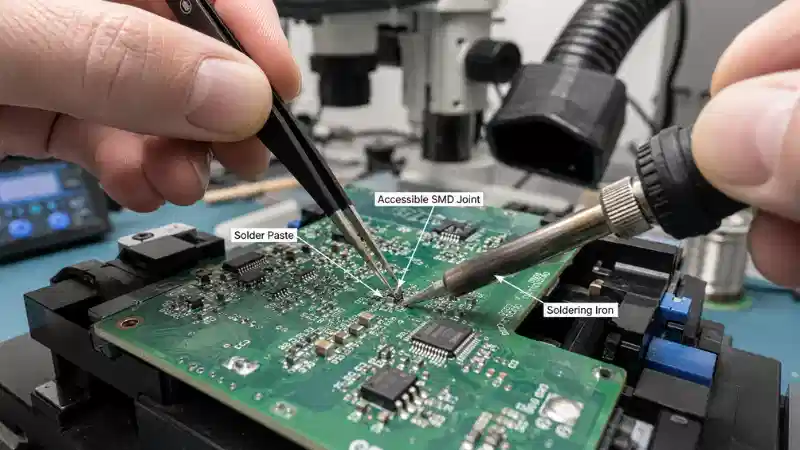
The debate between leaded and lead-free solder has persisted in electronics manufacturing for nearly two decades now, and frankly, it's gotten more complicated rather than less. Sn63/Pb37 eutectic solder-melting at precisely 183°C-dominated the industry for the better part of a century before environmental regulations forced a massive shift. Today, SAC alloys (tin-silver-copper) have become the default in consumer electronics, yet leaded solder refuses to die quietly. Understanding the metallurgical differences, regulatory landscape, and practical trade-offs isn't optional anymore; it's essential for anyone working with PCBs, whether you're running a production line or just fixing your kid's broken toy.

The Chemistry Nobody Wants to Talk About
Here's the thing about lead in solder that most articles gloss over: it's not there by accident. Lead drops the melting point dramatically. Pure tin melts at 232°C. Add 37% lead, and suddenly you're at 183°C. That's not a minor difference-that's the difference between a component surviving reflow and a component dying.
The eutectic point matters more than people realize. At exactly 63/37 tin-lead ratio, the alloy transitions from solid to liquid instantaneously. No pasty range. No weird in-between state where the solder is half-melted and half-solid. Just clean, predictable behavior.
SAC305 (96.5% tin, 3% silver, 0.5% copper)? Melts at 217-220°C. And it doesn't have a true eutectic-there's always a small pasty range. Seems trivial until you're dealing with thermal-sensitive components or trying to rework a board without destroying adjacent parts.
Why Lead-Free Happened (And Why It's Complicated)
RoHS. That's the short answer.
The European Union's Restriction of Hazardous Substances directive went into effect July 1, 2006, and the electronics industry has never been the same. Maximum allowable lead concentration: 1000 ppm (0.1% by weight) in homogeneous materials. Japan had similar standards, though theirs were even stricter at 500 ppm.
But here's where it gets interesting. The directive includes exemptions. High-reliability applications-servers, network infrastructure, medical devices, aerospace, military-can still use leaded solder. Why? Because nobody wanted pacemakers failing due to tin whiskers. Nobody wanted aircraft avionics developing cold joints at 30,000 feet.
The exemptions keep getting extended too. As recently as 2025, the EU extended lead exemptions for high-temperature solders (≥85% lead content) through 2027. The official reason? "Substitutes are not yet reliable enough." After almost 20 years. Let that sink in.
Wetting. It's All About Wetting.
I've watched experienced technicians struggle with lead-free solder for years, and most of their frustration comes down to one property: wetting.
Leaded solder flows. It spreads across copper like water on a hot pan. The contact angle is low, the surface tension works in your favor, and joints form almost naturally. You can actually watch it happen-the solder pulls itself toward the heat, wraps around leads, fills vias.
Lead-free? It sits there. Stubbornly. You have to coax it. The flux works harder, burns faster, and you've got a narrower window before oxidation kills your joint. The contact angle is higher, meaning the solder balls up rather than spreading out.
This isn't subjective. The wetting time for SAC alloys at comparable temperatures is measurably longer than Sn63/Pb37. Some manufacturers claim their flux formulations have closed the gap. They're mostly lying, or at least exaggerating.
The Temperature Problem Nobody Solved
Thirty-four degrees Celsius.
That's the difference between the melting point of eutectic tin-lead (183°C) and SAC305 (217°C). Doesn't sound like much until you consider what happens in a reflow oven.
Peak reflow temperature for leaded assemblies: 225-235°C. For lead-free: 255-265°C. Your components are soaking at higher temperatures for longer. Your board is warping more. Moisture trapped in plastic packages has more energy to vaporize and cause popcorning. Intermetallic compound growth accelerates.
And the margins shrink. With leaded solder, you had roughly 40-50°C of headroom between melting and damage. With lead-free, that window narrows to 25-30°C. Process control becomes critical. Your reflow profile better be dialed in perfectly, or you're scrapping boards.
I've seen production lines switch to lead-free and have their defect rates triple overnight. Not because anyone did anything wrong-the process window just got that much tighter.
Tin Whiskers: The Ghost in the Machine

This deserves its own section because it's genuinely terrifying.
Tin whiskers are crystalline structures that spontaneously grow from pure tin surfaces. They're thin-sometimes just a micron or two in diameter-and they can reach several millimeters in length. They cause shorts. They've brought down satellites. They've disabled nuclear power plant control systems. This isn't hypothetical; there are documented cases.
Lead prevents whisker formation. Even small amounts-as little as 3%-dramatically reduce whisker growth. The mechanism isn't fully understood, but the empirical evidence is overwhelming.
Lead-free solder has higher tin content. Lead-free surface finishes (like pure tin plating) are essentially whisker farms waiting to happen. The industry's response? Conformal coating. Careful stress management. Hoping for the best.
Some manufacturers add bismuth or other elements to suppress whiskers. Results are mixed. The problem hasn't been solved-it's been managed, sort of.
What Actually Happens When You're Soldering
Let me walk you through something practical.
You're at your bench with a temperature-controlled iron. Component needs soldering.
With 63/37 leaded solder:
Set iron to 300-320°C
Touch tip to joint, apply solder
Two seconds, maybe three
Clean, shiny, concave fillet
Done
Same component, SAC305:
Iron at 350-380°C
More flux, probably
Touch tip to joint, apply solder
The solder doesn't flow quite right
Add more heat
Three to five seconds now
Joint looks grainy, slightly dull (this is normal for lead-free, but it still looks wrong to anyone trained on leaded)
Maybe acceptable, maybe rework
The tactile feedback is different too. Leaded solder has a satisfying way of snapping from solid to liquid. Lead-free is mushier, less defined. Experienced people adjust. Beginners struggle.

Health Stuff (Because Someone Always Asks)
Yes, lead is toxic. No argument there.
Chronic lead exposure causes neurological damage, kidney problems, reproductive issues, developmental delays in children. Blood lead levels above 5 µg/dL are considered elevated by CDC standards. Occupational exposure limits exist for good reason.
But-and this is important-the primary exposure route isn't through skin contact. It's ingestion. Wash your hands after soldering. Don't eat at your workbench. Basic hygiene eliminates most risk.
The fumes you see when soldering? That's flux burning, not lead vapor. Lead's boiling point is 1749°C. Your soldering iron isn't getting anywhere close. Some lead oxide can form and become airborne, but concentrations at typical soldering temperatures are low.
Adequate ventilation matters. Fume extractors help. But the fear around leaded solder has been somewhat exaggerated for hobbyist use. Industrial settings with constant exposure and inadequate controls are a different story.
Lead-free isn't risk-free either. Rosin flux fumes cause respiratory sensitization in some people. Higher soldering temperatures mean more flux decomposition products. The "safer" alternative has its own issues.
Reliability: The Inconvenient Truth
Here's something the lead-free evangelists don't advertise: some SAC alloys actually outperform tin-lead in certain reliability metrics.
Thermal cycling? SAC305 often shows better fatigue resistance. High-temperature operation? Lead-free holds up better. Creep resistance? Generally superior in SAC alloys.
But.
Drop shock performance? Leaded solder wins. The joints are more ductile, less prone to brittle fracture. Vibration resistance? Also leaded. Cold environments? Lead-free solder becomes increasingly brittle below 0°C. There's even a phenomenon called "tin pest" where tin transforms to a different crystalline structure below 13°C, though it's rare in alloys.
The real answer is that reliability depends on your application. Neither is universally "better." Anyone who tells you otherwise is selling something.
Cost Breakdown
Nobody talks about this enough.
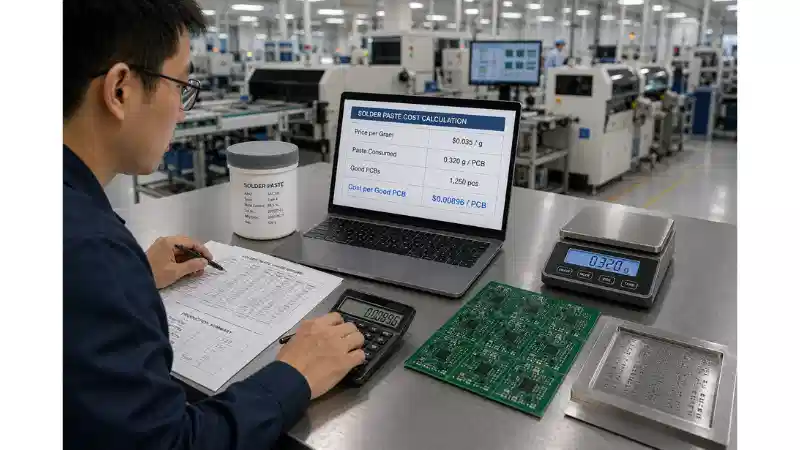
Raw material costs for SAC alloys run 2-3x higher than tin-lead. Silver isn't cheap. For wave soldering operations where you're maintaining a pot of molten solder, this adds up fast.
But that's just direct materials. Factor in:
- Higher-rated components (some can't handle lead-free reflow temperatures)
- Increased energy costs for higher-temperature processes
- More frequent tip replacement (lead-free eats iron faster)
- Tighter process controls
- Higher rework rates
One study estimated total cost increases of 5-15% for lead-free conversion in typical SMT lines. Your mileage will vary, but it's never free.

So Which Should You Use?
Depends entirely on context.
Definitely lead-free:
Products sold in EU, Japan, or other RoHS-compliant markets
Consumer electronics
Anything without specific exemptions
Probably leaded:
Prototyping and hobby work (easier, cheaper, more forgiving)
Aerospace, military, medical (where exemptions apply)
High-reliability applications where long-term behavior matters more than regulatory compliance
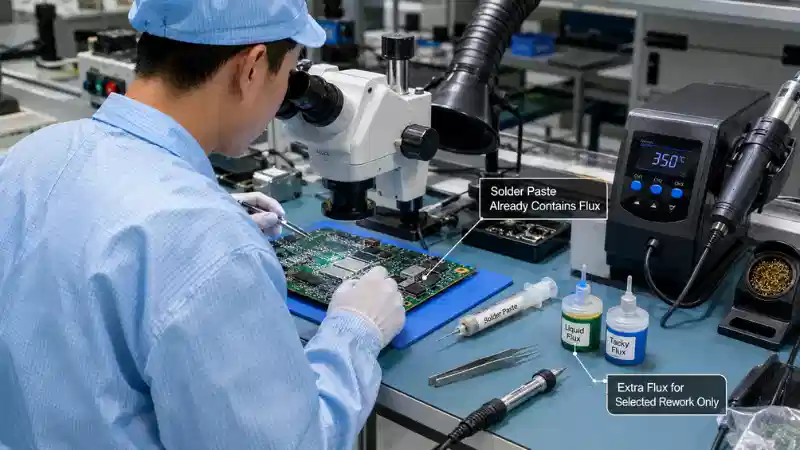
Rework stations (mixed assemblies aside, it's just easier)
The pragmatic middle ground: Many professionals keep both on hand. Lead-free for production, leaded for rework and prototyping. Just don't mix them in the same joint-the resulting alloy has unpredictable properties and a wide pasty range.
Final Thoughts (Sort Of)
The industry moved to lead-free not because it's technically superior-it isn't, in most respects-but because environmental regulations demanded it. That's fine. Environmental protection matters. But let's not pretend the transition was painless or that lead-free solder is objectively "better" for electronics.
Twenty years in, we're still dealing with tin whisker risks, still using exemptions for critical applications, still paying more for a process that's harder to control. The next generation of engineers might never touch leaded solder, which is probably fine for them. They won't know what they're missing.
For everyone else: use what makes sense for your application. Follow regulations where they apply. Don't believe anyone who tells you this is simple. It never was.