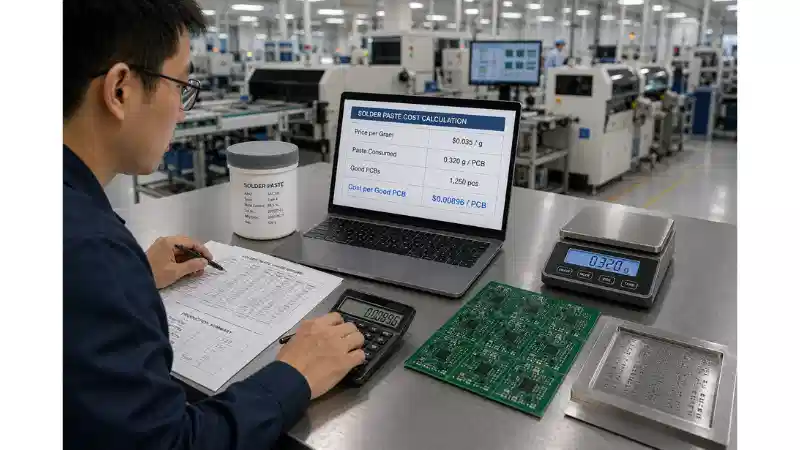
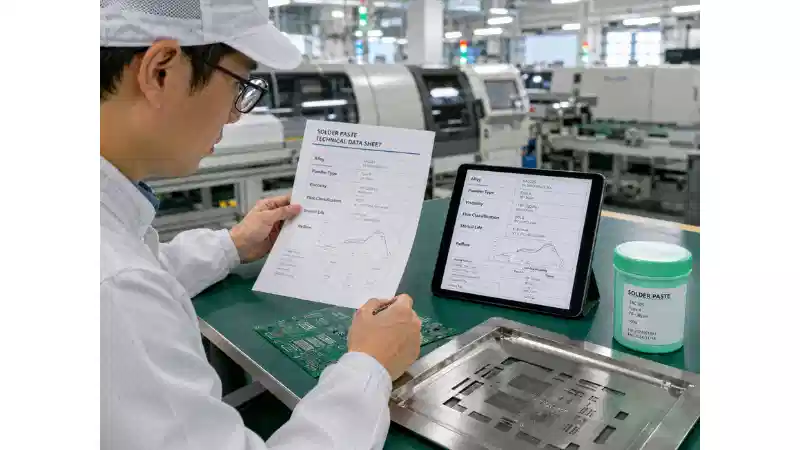
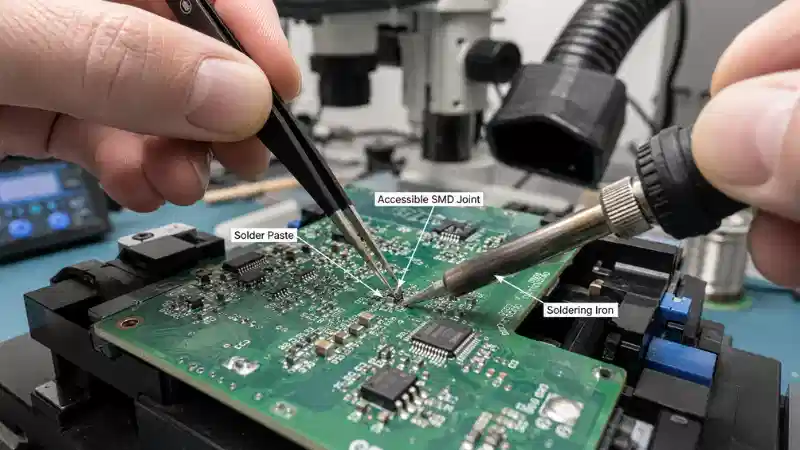
In surface mount technology, the distinction between flux and solder paste defines fundamental process decisions that impact yield, reliability, and production throughput. Flux-a chemical cleaning agent composed of activators, vehicles, and solvents-removes metal oxides from substrate surfaces and promotes wetting during thermal excursion. Solder paste integrates this flux chemistry with spherical alloy powder (typically 85-90% metal by weight) suspended in a viscous medium, creating a single-application material for component attachment. Both substances operate on the same metallurgical principles but serve distinctly different manufacturing contexts.
What Flux Actually Does
Here's the thing about flux that doesn't get talked about enough: it's fundamentally a sacrificial material. The activators-whether rosin-derived abietic acid, organic halides, or synthetic compounds-exist to chemically reduce copper oxides (Cu₂O and CuO) back to base metal during heating. This reaction happens fast. Really fast. And once those activators are consumed, you've got maybe 90-180 seconds before re-oxidation starts degrading your wetting window.
The IPC J-STD-004 classification system breaks this down with a four-character code. ROL0 means rosin-based, low activity, zero halides. ORM1 indicates organic flux with medium activity and halide content. Most engineers memorize a few common designations and call it a day.
The vehicle component-rosin, synthetic resin, or glycol-based carriers-serves two purposes. It dissolves the metal salts generated during oxide reduction, and it physically coats the joint during soldering to prevent atmospheric re-oxidation. Water-soluble fluxes use polyethylene glycol derivatives that rinse clean but absorb moisture like crazy if left on the board. Rosin solidifies into an amber residue that's electrically inert under normal conditions. No-clean formulations leave minimal residue by design, though "no-clean" is somewhat misleading-under harsh service conditions or with certain surface finishes, even these residues can cause issues.
Solder Paste: The Engineered Combination
Solder paste eliminates the separate flux application step entirely. The alloy powder-Sn63/Pb37 eutectic for legacy applications, SAC305 (Sn96.5/Ag3.0/Cu0.5) for RoHS compliance-is suspended in flux medium at controlled ratios. The paste behaves as a thixotropic fluid: it sits stable on the stencil but flows under shear stress from the squeegee.
Particle size matters more than most people realize. Type 3 powder (25-45μm diameter) works fine for 0.5mm pitch components. Drop to 0.3mm pitch and you're looking at Type 4 (20-38μm) or Type 5 (15-25μm). Finer powder means more surface area, which means faster oxidation during storage and higher flux demand during reflow. There's always a tradeoff.
Storage requirements drive a lot of shop floor headaches. Solder paste degrades through multiple mechanisms: the metal particles oxidize, the flux separates from the carrier, solvents evaporate through imperfect seals. Refrigeration at 0-10°C extends shelf life to 3-6 months. Leave it at room temperature and degradation accelerates within weeks. Every paste jar needs to equilibrate to ambient for 4-8 hours before use-open it cold and condensation contaminates the flux.
The Stencil Printing Reality
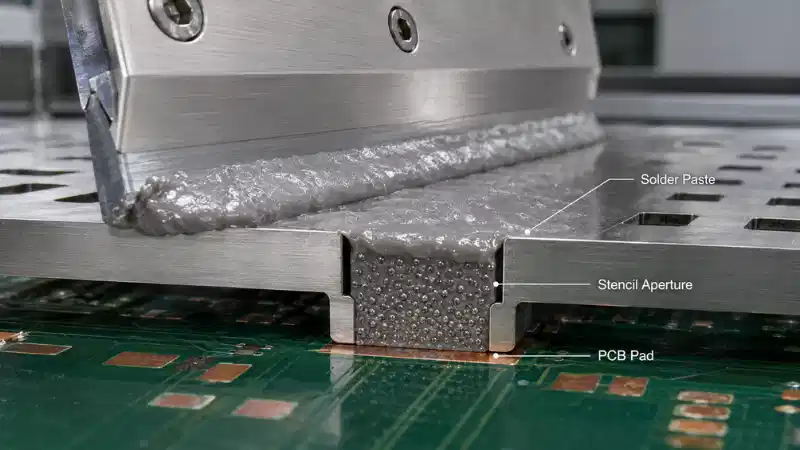
Stencil thickness selection follows the area ratio rule: aperture opening divided by wall surface area should exceed 0.66 for reliable paste release. A 150μm thick stencil works for most applications. Fine-pitch BGAs might require 100μm or even 80μm. Laser-cut stencils provide cleaner aperture walls than chemical etch, which translates directly to transfer efficiency.
The whole paste-on-pad process depends on breaking the adhesive bond between paste and stencil wall while maintaining the cohesive bond within the paste deposit. Get this wrong and you'll see incomplete fills, dog-ears, bridging at print-defects that propagate through reflow as open joints or shorts.

When You Use What
The decision tree isn't complicated once you understand the process constraints.
Solder paste dominates SMT assembly. Reflow soldering-whether convection, vapor phase, or IR-requires the solder material to be pre-positioned on pads before component placement. There's no practical alternative for production volumes. A pick-and-place machine deposits components onto tacky paste deposits; the paste adhesion holds everything in position through conveyance into the reflow oven.
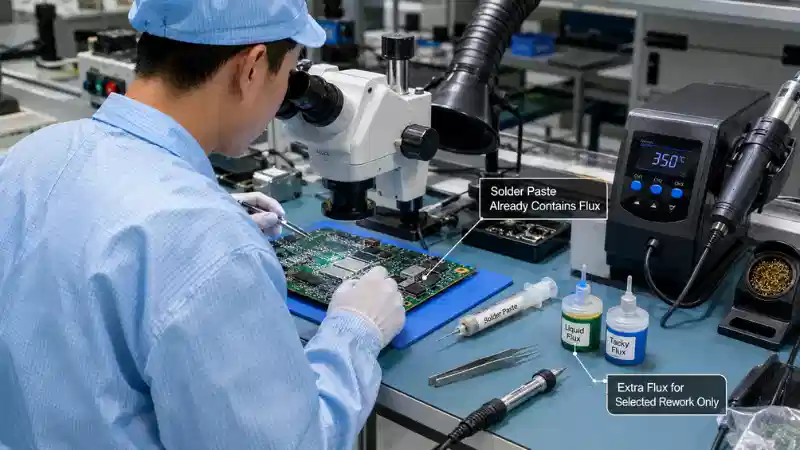
Standalone flux serves different applications. Wave soldering for through-hole components uses spray or foam fluxers to coat the board underside before it contacts the molten solder wave. Rework stations depend on liquid or gel flux applied directly to the joint being repaired. Hand soldering traditionally uses flux-cored wire, though supplemental flux improves results on oxidized surfaces or difficult alloys.
Selective soldering-a hybrid approach for mixed-technology boards-typically uses dedicated flux jets that apply material only where the selective nozzle will contact.
The Reflow Profile Problem
This is where flux chemistry intersects with thermal engineering, and where things get genuinely complicated.
A standard reflow profile has four zones. Preheat ramps from ambient to around 150°C at 1-3°C per second-fast enough for throughput, slow enough to avoid thermal shock on ceramic capacitors and to allow uniform heating across the assembly. The soak zone holds between 150-180°C for 60-120 seconds. This is where flux activation really happens. Solvents volatilize, activators begin attacking oxides, and the entire assembly equilibrates to near-uniform temperature.
Then the ramp to peak. Lead-free alloys demand 240-250°C peak temperature with 30-60 seconds above liquidus (217°C for SAC305). The intermetallic compounds form during this window-Cu₆Sn₅ at the interface between solder and copper pad. Too short and you get inadequate wetting. Too long and intermetallic growth weakens the joint; the IMC layer becomes brittle.
Cooling rate should hit 3-4°C per second through solidification. Slower cooling grows larger grain structures with inferior fatigue resistance.
The flux in your paste sets hard constraints on this profile. No-clean formulations have lower activity-they need cleaner surfaces to start with and tighter process windows. Water-soluble pastes offer aggressive oxide removal but absolutely require post-reflow cleaning. Miss a cleaning step and you'll see dendritic growth between conductors within months of field deployment.

The Defect Taxonomy
Every production engineer has their personal nemesis among SMT defects. Here's the relationship to flux and paste selection:
Tombstoning (Manhattan effect): One end of a chip component lifts during reflow. The root cause is uneven wetting forces-if one pad wets before the other, surface tension pulls the component vertical. Flux activity and paste volume balance matter here, but so does pad geometry and thermal symmetry.
Solder balling: Those tiny spheres scattered around components after reflow. Multiple causes-solder paste spattering from rapid heating in preheat, flux outgassing during reflow, or paste squeeze-out during component placement that doesn't coalesce with the main joint. Low-residue fluxes sometimes make this worse because there's less vehicle to contain escaped solder.
Bridging: Excess solder connecting adjacent pads or leads. Can originate at print (too much paste, stencil misregistration) or during reflow (insufficient flux activity, component misalignment). Fine-pitch parts on 0.4mm centers are especially vulnerable.
Voiding: Gas pockets trapped within the solder joint. Flux volatiles that don't escape before solidification are the usual culprit. Bottom-terminated components-QFNs, LGAs-show this worst because there's nowhere for gas to vent. Vacuum reflow helps. So does paste formulation with lower voiding tendency. Some applications just learn to live with 25-30% void area.
Cold joints / non-wetting: The solder didn't properly wet one or both surfaces. Insufficient flux activity, oxidized surfaces, or inadequate time above liquidus. This is where flux selection really matters-heavily oxidized boards or components with poor solderability need higher-activity flux, period.
Flux Types: The Quick Rundown
Rosin (R): Natural pine-derived rosin in solvent. Very low activity. Works on pre-tinned surfaces and not much else. Residue is hard and inert. Nobody uses this for production anymore but it persists in hobbyist applications.
RMA (Rosin Mildly Activated): Rosin plus mild activators. The classic flux type for decades. Still useful for hand soldering with reasonable cleanliness expectations.
RA (Rosin Activated): Aggressive activators for oxidized surfaces. Residue can be corrosive-mandatory cleaning. IPC classifications like ROM1 or ROH0.
No-Clean: Engineered for residue left in place. Low solids content, typically 2-5% versus 15-30% for rosin fluxes. Requires cleaner starting surfaces and tighter process control.
Water-Soluble: Organic acid-based, extremely active, completely corrosive if not removed. Superior wetting performance. Absolutely requires aqueous cleaning post-reflow-DI water spray or immersion with surfactants. Popular for automotive and high-reliability applications where cleaning is already part of the process.

Storage and Handling Details That Actually Matter
Solder paste wants to be refrigerated, but pulled 4 hours before use. It wants to be stirred or kneaded before loading into the printer. It wants to see consistent squeegee pressure and separation speeds. The first prints after paste loading often show different transfer characteristics than prints made after the paste has worked for a few cycles.
Flux in liquid form-for wave or selective soldering-has fewer handling demands but still degrades. Alcohol-based fluxes evaporate if containers aren't sealed. Water-based formulations can support microbial growth over time.
The biggest failure mode I've seen repeatedly: using paste beyond its shelf life because "it still looks okay." The paste might print fine and deposit reasonable volumes. But the flux chemistry has degraded, so you get beautiful-looking paste deposits that don't wet properly during reflow. The joints look dull and grainy. Electrical test catches some failures; others ship to customers and fail in field.
Making the Call
For SMT production: solder paste, always. Match the flux type to your cleanliness requirements and surface finish. OSP (organic solderability preservative) boards tolerate no-clean paste in most cases. ENIG (electroless nickel immersion gold) is forgiving. HASL (hot air solder leveling) finish already has a solder coating, so flux activity demands are lower.
For through-hole assembly on dedicated lines: wave soldering with liquid flux applied by spray fluxer or foam. For mixed-technology boards, pin-in-paste (intrusive reflow) eliminates the wave step for many designs.
For rework: tacky flux or gel flux applied locally. The joint needs cleaning action but you don't want material migrating into neighboring areas.
For prototype work or low-volume hand assembly: flux-cored solder wire handles most situations. Keep a flux pen around for stubborn joints.
The broader point is that flux and solder paste aren't alternatives to each other in most contexts-they're different product categories serving overlapping but distinct functions. Solder paste is an engineered system that includes flux. Standalone flux is a process consumable for applications where the solder material arrives separately. Understanding when each fits, and why, is basic literacy for anyone touching electronics manufacturing.
There's more nuance available-alloy selection, lead-free transition challenges, the detailed physics of intermetallic formation, inspection methodology for flux residue classification. But for making day-to-day process decisions, the fundamentals here cover most situations you'll encounter.